Galactic History.
A brief history of the galaxy and the formation of the Grand Galactic Senate and the start of the Games.
The Unravelling.
The galaxy exists within a state of perpetual, unsettling beauty. The Shimmer — a phenomenon of iridescent dust and energy — permeates everything, a byproduct of the ancient catastrophic event known only as The Unravelling. This Shimmer fuels much of the galaxy’s technology, but it also casts a constant, eerie light, illuminating the rot beneath the gilded surface.
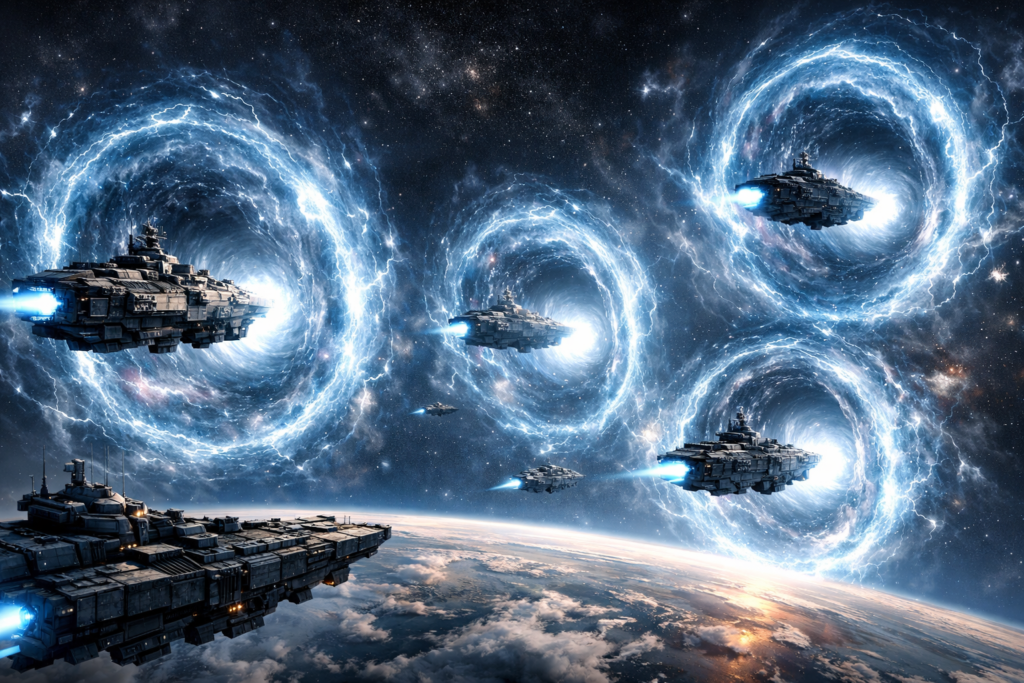
Eight thousand years ago, before the Unravelling, the galaxy throbbed with frenetic scientific energy. Ships — sleek and audacious — traversed the void not through brute force, but via meticulously charted wormholes, a technology perfected over countless generations. Nuclear and solar power dominated; colossal fusion and fission stations pulsed with harnessed energy, fueling a relentless arms race among the burgeoning spacefaring species.
The galaxy was a chaotic tapestry of competing interests. Nearly every species possessed interstellar travel, each striving to carve out its own sphere of influence.
Then, 7,000 years ago, without warning, it happened.
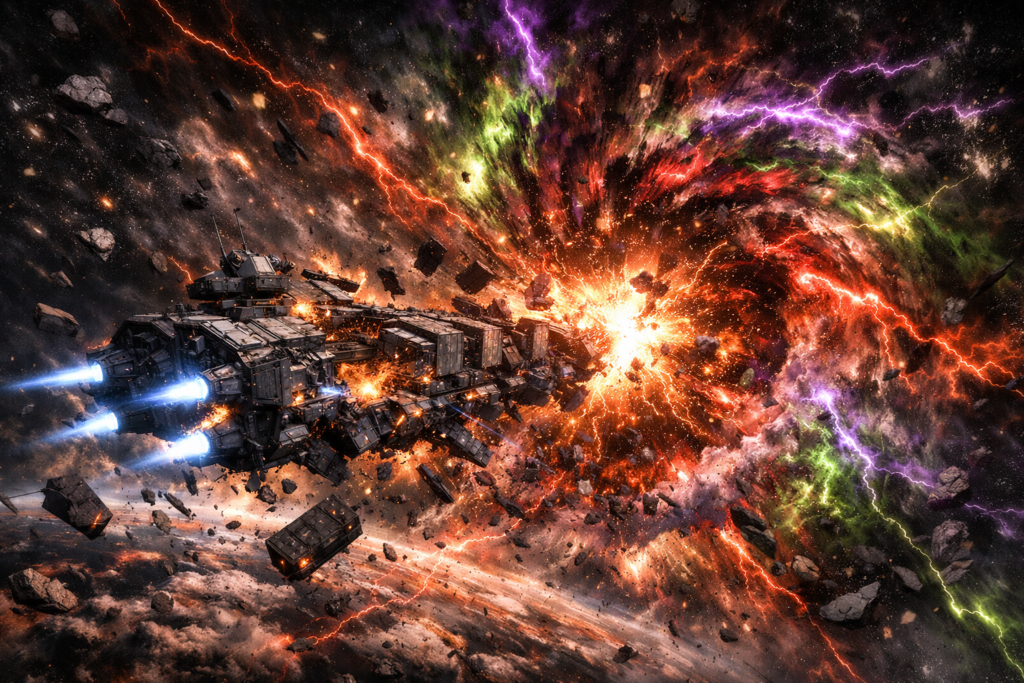
Vessels attempting to navigate wormholes simply ceased to exist, swallowed by a silent, implacable void. Artificial nuclear reactions failed — the delicate collisions required for fusion and fission simply… stopped. Even stars refused to yield their energy.
The Unravelling was not a single event, but a slow, terrifying collapse of reality itself.
Post-Unravelling Transition
The Unravelling left the galaxy fractured and reeling — a silent testament to a forgotten power. Yet from the chaos emerged a new order: the Galactic Union.
Just one year after the cataclysm, representatives from the Dwarfs, Sylvani, Sildrin, Vexari, and Or’rathai — species once locked in centuries of rivalry — began a coordinated campaign of exploration.
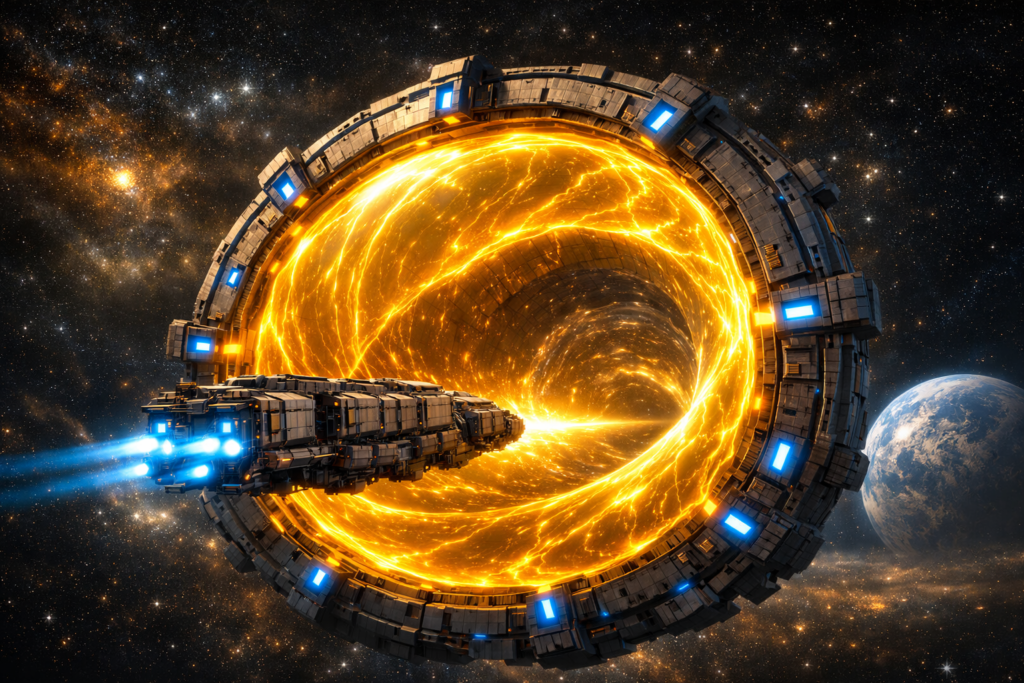
The collapse of the wormhole network left the galaxy fractured, returning distance to its former role as a true barrier. Systems that had once relied on stable transit routes suddenly found themselves isolated, cut off from trade, communication, and reinforcement. Without a replacement, interstellar civilisation would not have survived. Yet the solution that emerged was not the restoration of the old network but its replacement. Through continued study of the Shimmer, the Galactic Union discovered that the phenomenon could be stabilised—not universally, but at specific, fixed points in space. These points became the foundation of a new system: the Shimmer Gateways. Unlike the wormholes of the past, these Gateways do not create pathways; they anchor them. Each Gateway functions as a controlled node within the fractured fabric of space, capable of linking to another Gateway across vast distances. These connections are not permanent; they must be initiated, stabilised, and maintained through precise interaction with the Shimmer. Without that interaction, the Gateways remain dormant, silent, and useless.
To utilise these Gateways, a vessel requires more than navigation systems or raw power—it requires authorisation. The Shimmer Drive provides that authorisation. Installed within a vessel, the Drive does not generate propulsion in any traditional sense. Instead, it interfaces directly with Gateway systems, allowing a ship to initiate and survive transit between nodes. It does not open the path; it unlocks it. When activated within range of a Gateway, the Drive synchronises with the surrounding Shimmer field, aligning the vessel with a designated destination node. Only once this alignment is complete does the Gateway activate, briefly stabilising a passage through the fractured structure of space. The vessel does not travel freely; it is transferred—precisely, directly, and entirely under system control.
The implications of this system are absolute. A ship equipped with a Shimmer Drive cannot travel wherever it chooses. It can only move from Gateway to Gateway, along approved routes, to authorised destinations. Every transit is logged, every destination regulated, every movement known. The galaxy is connected, but not free. The Galactic Union—and later the Grand Galactic Senate—presented the Shimmer Drive as a gift: a means of survival, a tool of reconstruction, a shared technology to rebuild civilisation. And in one sense, it was. Without it, the galaxy would have remained divided. But the true nature of the system was never hidden—only unspoken. The Drive is not freedom; it is dependency.
The Grand Galactic Senate maintains total control over Gateway construction, route designation, and Drive production and calibration. No independent system possesses the capability to create or maintain its own Gateways, and no unauthorised vessel can reliably access the network. Even minor variations in Drive configuration can result in failed synchronisation, misalignment, or complete loss during transit. As a result, all functional Drives must be certified, maintained, and approved by the Senate. Through the Shimmer Drive system, the Senate achieved what no empire before it could: total regulation of interstellar movement. Trade flows can be redirected, systems can be isolated instantly, and rebellions can be contained before they spread. A world without access to Gateways is not merely distant—it is cut off.
The Grand Galactic Senate.
Formation of the Grand Galactic Senate
Centuries passed — two thousand years, to be precise.
During this time, the Galactic Union solidified its position as the dominant force within the fractured galaxy. Trade routes stabilised, Shimmer Gateways expanded, and a fragile sense of order began to take hold.
Yet beneath this stability, something deeper was taking root.
Approximately 5,000 years ago, a profound — and deeply unsettling — agreement was reached.
No single document records the exact terms of the agreement that formed the Senate.
The core species of the Union — many of whom had been subtly influenced by the so-called gift of the Golden Worm — came together to form a new governing body:
The Grand Galactic Senate.
This marked a pivotal moment in galactic history.
What had once been an alliance of necessity became a system of control.
The Shift from Union to Senate
The Galactic Union had been built on cooperation — a desperate attempt to survive the aftermath of the Unravelling.
The Senate was different.
It was not created merely to preserve stability, but to manage it.
To regulate it.
To define it.
Power, once shared between species, became centralised within a single political structure. Representation remained in appearance, but influence became increasingly concentrated among those with the resources, longevity, and connections to maintain it.
And among them, none held more influence than those touched by the Worm.
The Quiet Influence of the Golden Worm
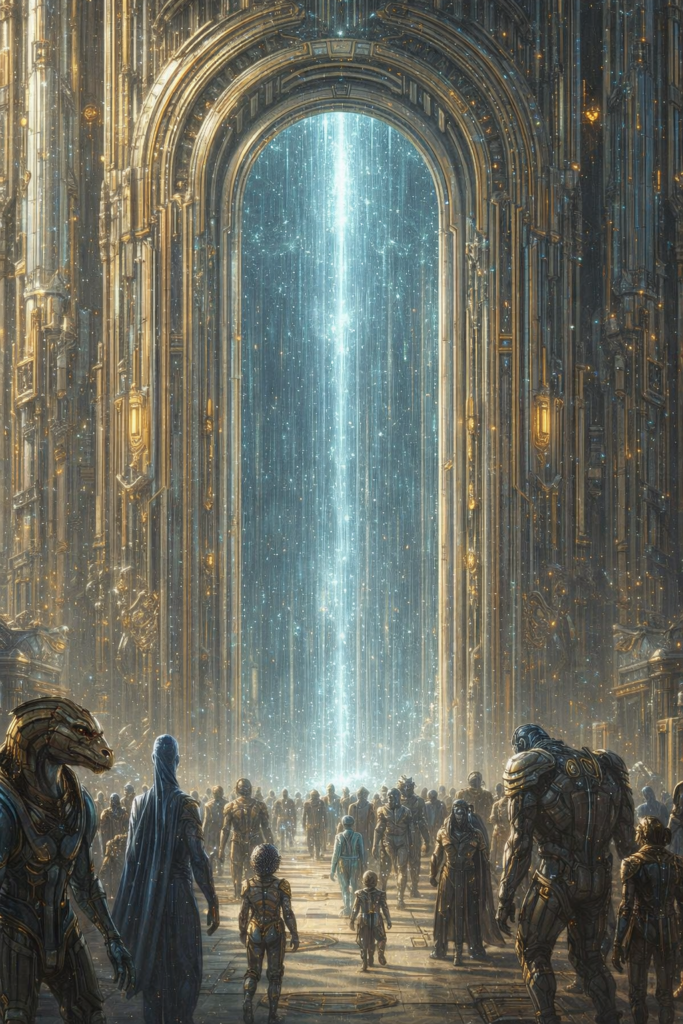
The formation of the Senate cannot be understood without acknowledging the role of the Nyrr’khal.
By this time, symbiote bonding had already spread among key leaders across multiple species. These individuals — longer-lived, more resilient, and increasingly interconnected — provided a level of continuity no ordinary government could achieve.
Policies no longer shifted with generations.
They endured.
Decisions were no longer made for decades.
They were made for centuries.
To many, this appeared to be the galaxy’s greatest strength.
To others, it was the beginning of something far more dangerous.
A Government Built to Last
Officially, the Grand Galactic Senate was formed to:
Maintain peace between species
Regulate access to Shimmer Gateways
Oversee interstellar trade and expansion
Prevent another galaxy-wide collapse
And in many ways, it succeeded.
Large-scale war diminished.
Trade flourished.
Civilisations rebuilt.
But stability came at a cost.
The Unspoken Truth
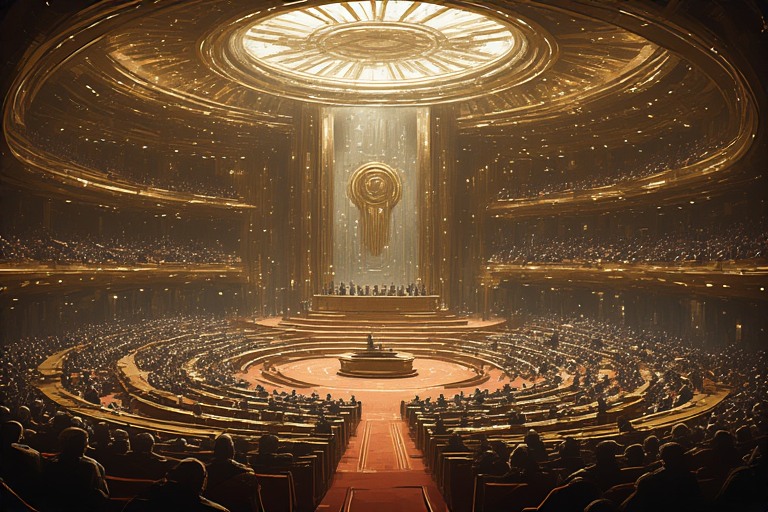
The Senate did not simply govern the galaxy.
It defined the limits of what the galaxy could become.
With control over movement through the Shimmer Drive network, influence over resource distribution, and the quiet guidance of immortal or near-immortal leaders, the Senate achieved something unprecedented:
A system that could not easily be challenged.
A system that could not easily change.
A system that, over time, became less a government—
and more a structure of permanent control.
The Legacy of Its Creation
To the public, the formation of the Grand Galactic Senate is remembered as the moment the galaxy was saved.
To historians, it marks the beginning of a new era.
To a select few, it represents something else entirely:
The moment the galaxy stopped rebuilding…
and started being managed.
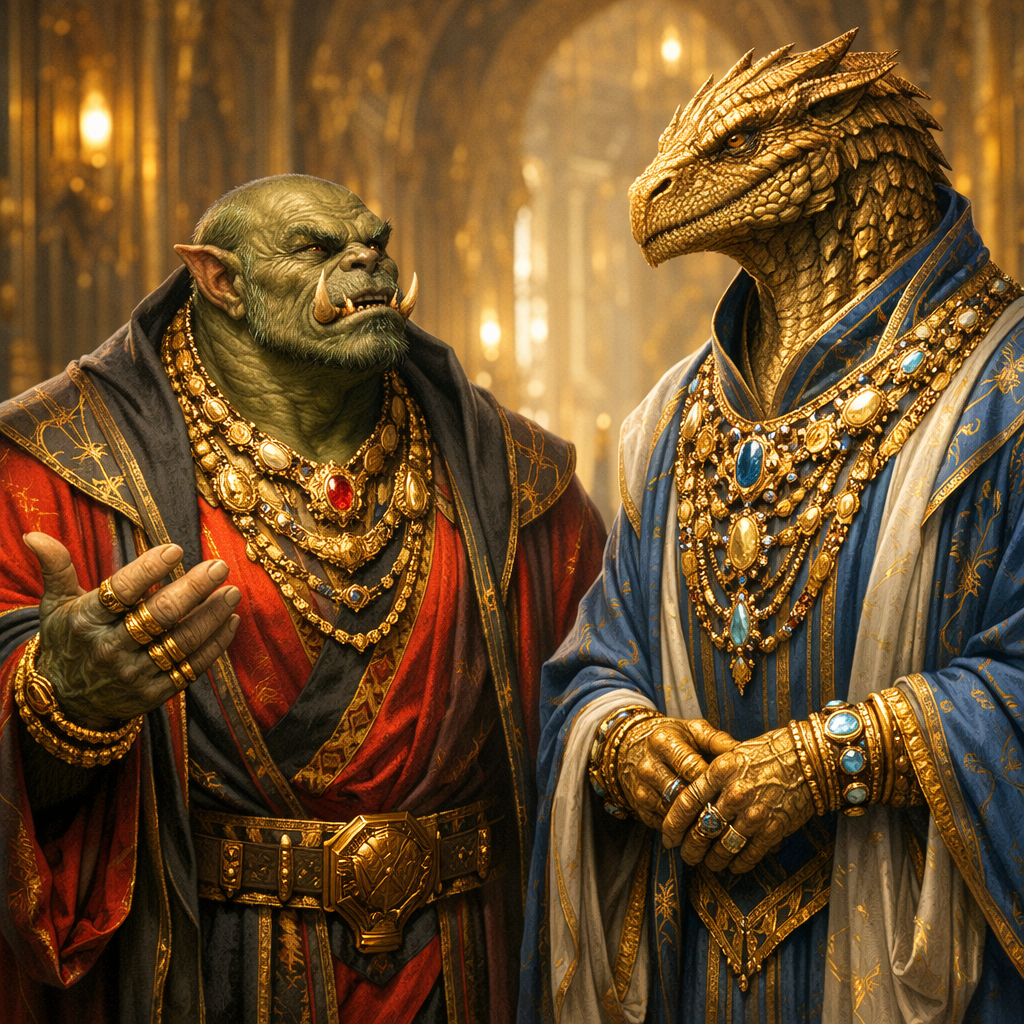
The Grand Galactic Senate (GGS): The Facade of Unity
Officially, the Grand Galactic Senate (GGS) is the pinnacle of galactic governance.
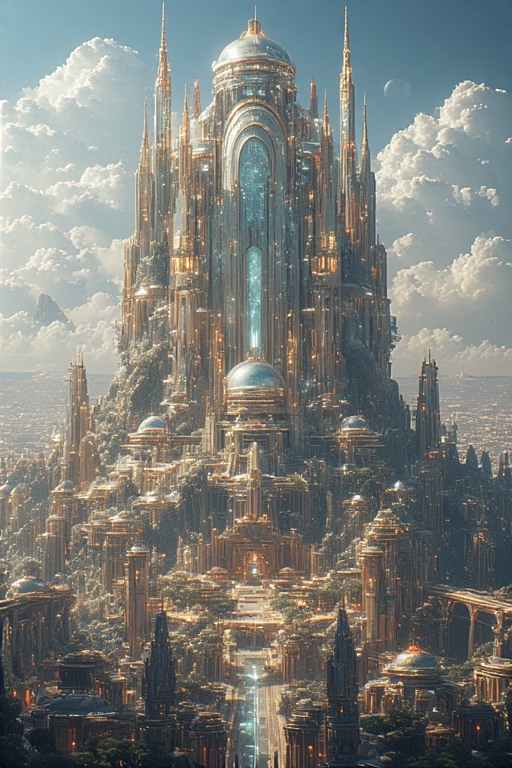
A sprawling, shimmering edifice known as the Citadel stretches across the planet of Aethel — a world renowned for its diplomatic artistry. Its appearance is meticulously crafted: a kaleidoscope of architectural styles representing thousands of member species, from the chitinous K’tharr to the crystalline Sylvani, the insectoid Kryll to the gaseous Aeravi.
Millions of worlds — a truly staggering variety — fall under the authority of the Senate, and speeches delivered in hundreds of languages echo endlessly through its vast chambers.
The Official Narrative
The public image of the GGS is one of peace, prosperity, and collaborative progress.
It champions trade, cultural exchange, and the “harmonious development” of all civilisations. It presents itself as a bastion of reason and diversity — a direct response to the horrors of the Unravelling.
To most citizens of the galaxy, the Senate is not just a government.
It is stability.
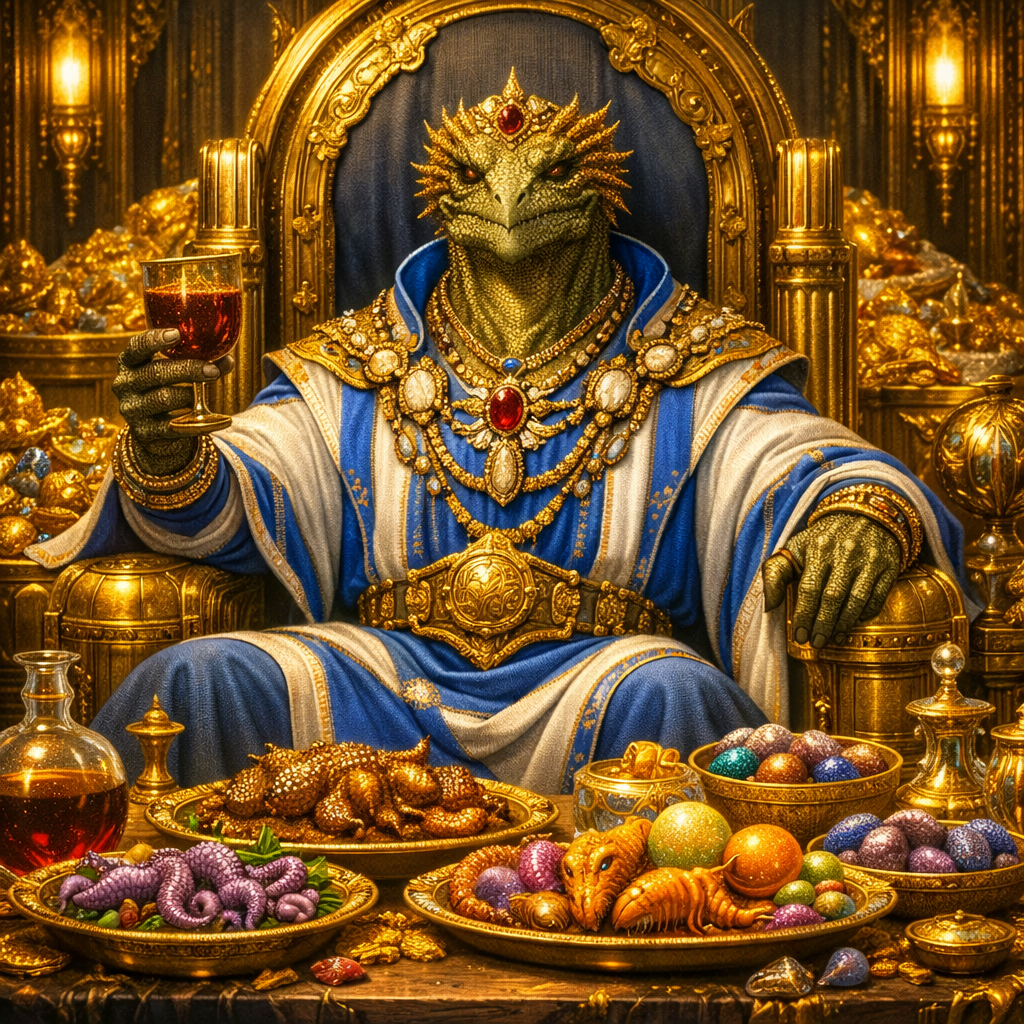
The Truth Beneath
In reality, the GGS is a suffocatingly corrupt oligarchy.
Each of the 1,000+ member species maintains its own bloc within the Senate, but these blocs are not driven by ideology or concern for their people. Instead, they function as instruments of personal ambition, ancient rivalries, and the relentless consolidation of power.
Senators do not truly represent planets.
They represent families, dynasties, and corporations.
The illusion of diversity is carefully constructed — a performance designed to maintain public trust. Behind closed doors, power is traded, influence is bought, and decisions are shaped not by what benefits the galaxy, but by what preserves control.
The system is, in essence, the worst of all governments:
A brutal oligarchy draped in the veneer of democracy.
Trade routes are manipulated.
Treaties are enforced selectively.
Entire systems rise or fall based on the interests of those who sit within the Citadel.
And above it all, the Senate ensures one thing above all else:
Its own permanence.
Grand Galactic Games.
The Grand Galactic Games (GGG): Spectacle of Suppression
In the centuries following the Unravelling, the galaxy was ravaged by constant, low-level conflict — driven by dwindling resources, fractured territories, and unresolved rivalries.
Recognising both the damage and the destabilising influence of perpetual war, the Grand Galactic Senate instituted a solution:
The Grand Galactic Games.
Initially framed as a path toward peace, the GGG has since evolved into a monumental, galaxy-spanning entertainment spectacle.
The Presentation
Battles are staged across designated Arenas — vast, artificially constructed environments embedded within the Shimmer. These Arenas are typically located on barren, resource-poor worlds, ensuring a steady influx of desperate participants, scavenged equipment, and expendable manpower.
The conflicts themselves are elaborate and carefully choreographed, designed to deliver a thrilling — if heavily sanitised — portrayal of galactic warfare.
War, refined into spectacle.

The Audience
The entire galaxy is invited to watch.
The Senate has mastered the art of propaganda, utilising advanced holographic projection and neural-stimulation technology to immerse viewers fully in each battle. Spectators do not merely observe — they experience.
They feel the impact.
They sense the danger.
They live the conflict.
Wagering on outcomes has become a cultural norm, generating immense revenue streams that flow directly back into the Senate’s systems of control.
The Justification
Officially, the GGG represents the pinnacle of peacekeeping:
A controlled environment in which conflict can be expressed without destabilising the galaxy.
A demonstration of the Senate’s ability to manage violence rather than eliminate it.
But beneath this justification lies a calculated truth.
The Games exist to ensure that no emerging power — no newly advanced species, no rising world, no independent military force — can accumulate the strength required to challenge the Senate.
War is not ended.
It is contained.